ICD Mapping
G31.84
Mild cognitive impairment of uncertain or unknown etiology
Condition Hub
For Mild Cognitive Impairment, this page connects condition-level information with the CarePlanCompass™ Library. The goal is to make it easier to find related education, planning tools, caregiver supports, and follow-through resources from one place. When available, this hub can point visitors toward Cognitive Bundle, Cognitive Rehabilitation Companion, and Executive Function Companion. The purpose is to keep condition-level searching connected to real CarePlanCompass™ materials. Care needs connected to Mild Cognitive Impairment may overlap with other topics in the Cognitive & Sensory series. This hub keeps those supports grouped around sensory needs, cognition, communication, routines, caregiver support, and participation and practical follow-through. Visitors may be looking for symptom tracking, daily routine support, caregiver communication, questions for appointments, or tools that make follow-through easier. The ICD-linked description in the current database is “Mild cognitive impairment of uncertain or unknown etiology.” That wording helps connect the hub to coded condition context, but the public-facing purpose is simpler: help people find related education and support without digging through the full Library. CarePlanCompass™ resources are educational and planning supports. They do not replace medical advice, emergency care, clinical judgment, or an individualized plan of care.
Mild cognitive impairment of uncertain or unknown etiology
This hub automatically pulls mapped companions, bundles, resources, publications, and related condition pages from the database.

A structured cognitive rehabilitation companion focused on memory, attention, processing speed, executive function, cognitive-communication, social...
A structured executive function companion focused on initiation, planning, sequencing, organization, time management, working memory, impulse contr...
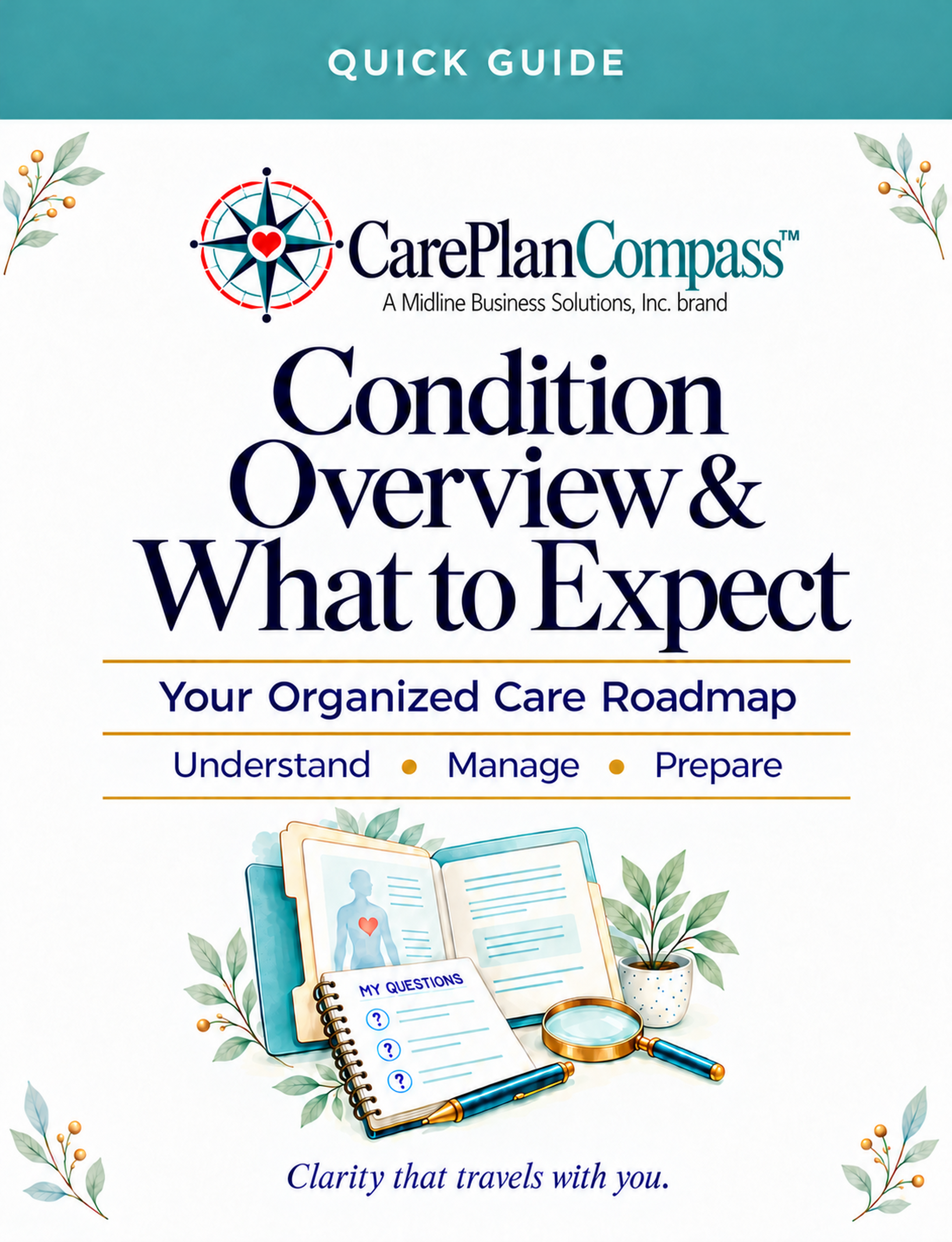
A plain-language guide to understanding a health condition, what may change over time, and the questions to bring to your care team.

A free two-page planner that helps you fit your care tasks into the day you already have, with a weekly check-in to see what is working.
A ready-to-use plan for the early signs of a flare, the steps your care team gave you, and when to call for help.
A free guide to staying safe when vision, hearing, touch, or balance changes.
A free guide to finding and keeping motivation for your care plan and daily activities.
A free guide to noticing and naming feelings and how they affect your day.
Free prompts to help you adjust more easily when plans change.
Simple, steady tools to keep your care plan, daily check-ins, notes, and questions in one place.

A CarePlanCompass™ resource designed to support clarity, recovery, and next-step confidence.

A guided journal for reflecting on your mood, noticing what helps, and staying engaged in the activities and roles that matter to you.
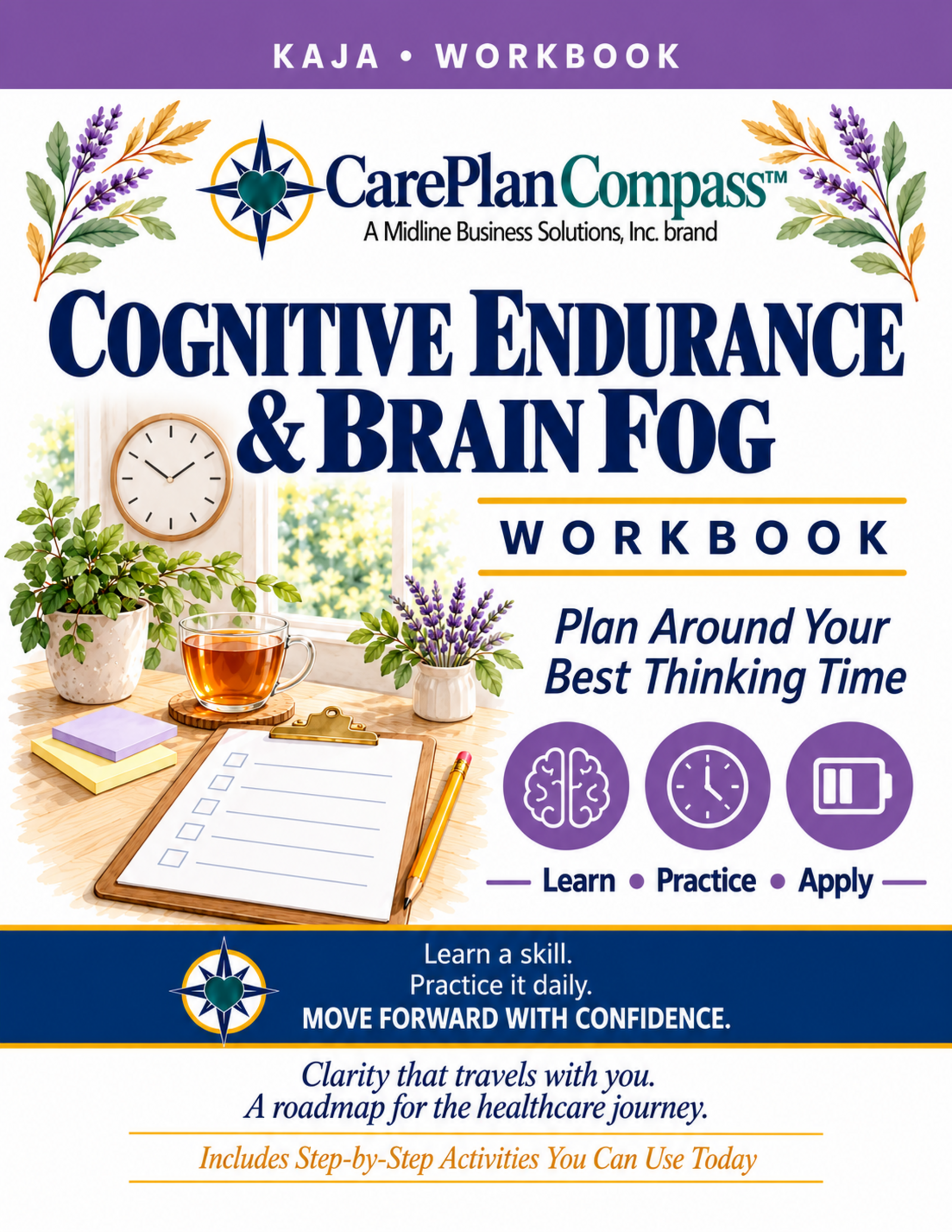
A CarePlanCompass™ resource designed to support clarity, recovery, and next-step confidence.

A CarePlanCompass™ resource designed to support clarity, recovery, and next-step confidence.
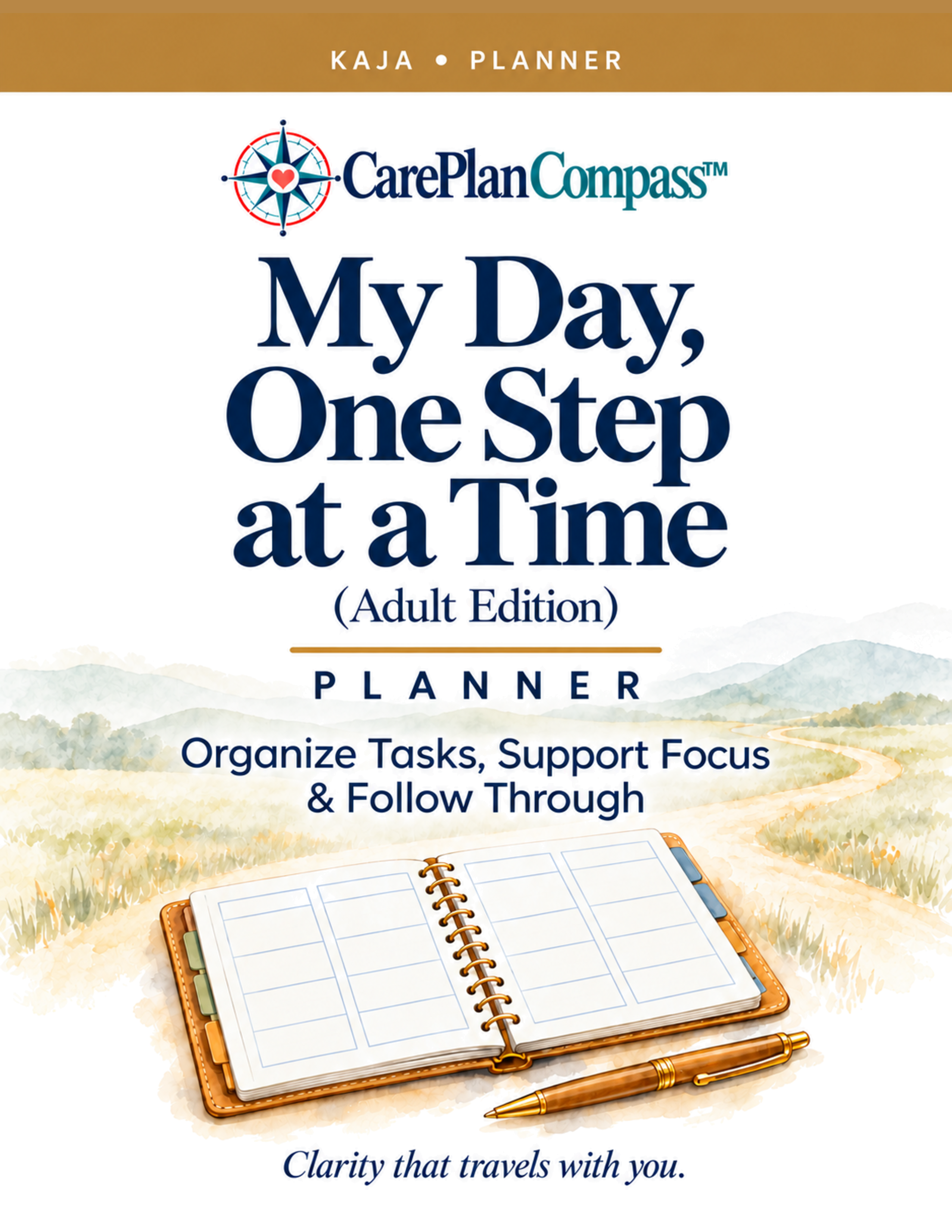
A CarePlanCompass™ resource designed to support clarity, recovery, and next-step confidence.
Need a Starting Point?
Answer a few simple questions before choosing a specific item.
Start Care Compass
