Item Details
About this resource
Start here
The essentials before you go deeper.
More details
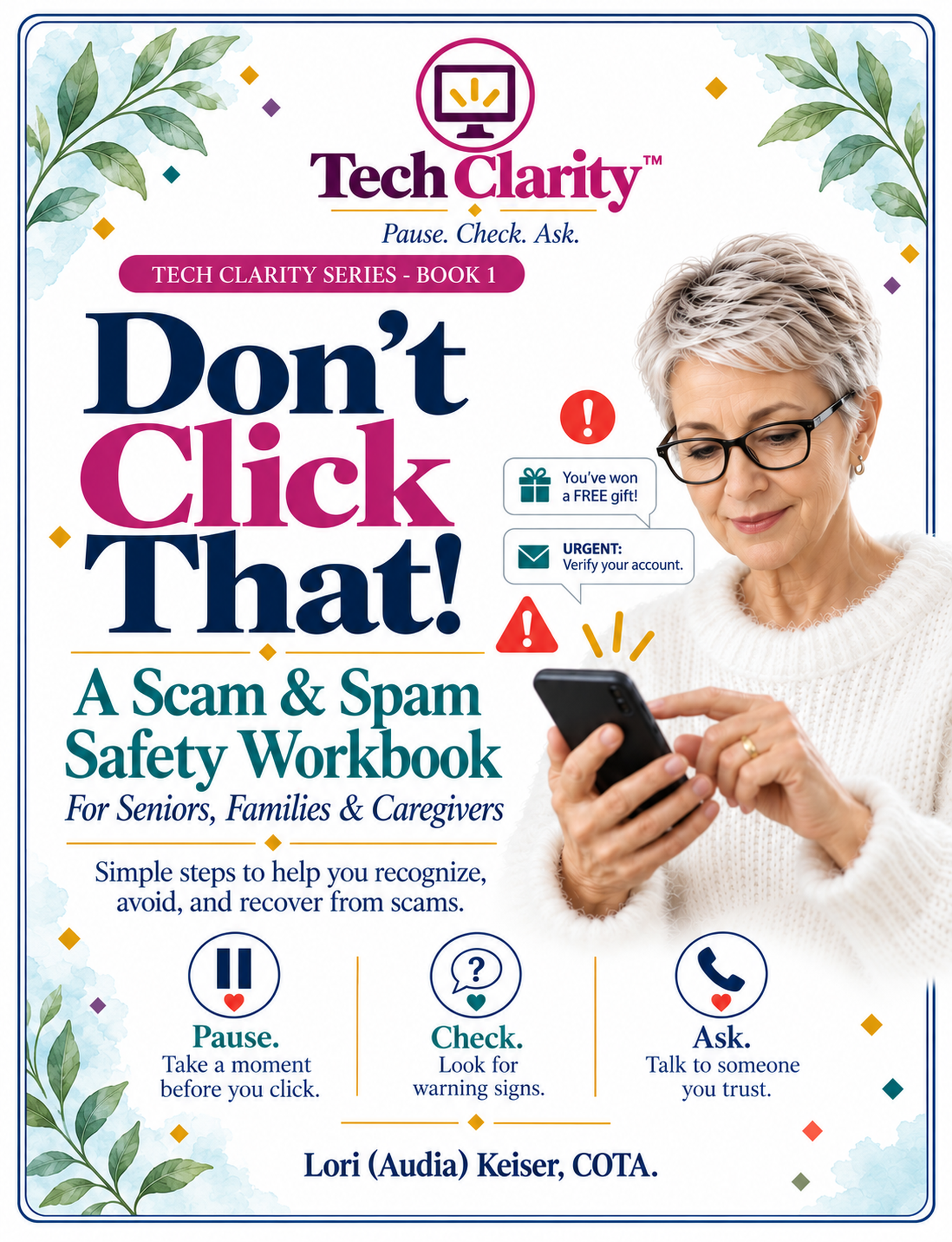
Scammers do not only target careless people. They target busy, helpful, worried, and caring people, and they use fear, urgency, secrecy, and familiar names to rush a decision. Don't Click That! turns scam-awareness advice into a calm, repeatable plan you can practice before the next suspicious message arrives. The workbook is built around one habit: Pause. Check. Ask. Stop the click, call, reply, or payment. Check the story through a number, app, or website you already trust. Ask someone you trust before you act. Part I, Build Your Scam-Safety Reflex: why scams work, the five pressure signs, and your own verification plan, trusted safety circle, and family safe word. Part II, Practice Real Situations: phone calls and pop-ups, texts, emails and links, bank, government and delivery messages, AI voices and family emergencies, gift cards and payment apps, and romance, investment and prize scams. Part III, Know What to Do Next: short scripts for pressured moments, step-by-step checklists for after clicking a link, sharing a password, sending money, or giving remote access, where to report and recover, and a family safety plan and agreement. Every page has room to write. Practice labs with an answer key, a Before You Click checklist, trusted contacts, and a tech help journal make it a workbook you will come back to. Guidance is drawn from official sources, including the Federal Trade Commission, the Social Security Administration, CISA, the U.S. Postal Inspection Service, and Medicare. Educational technology support only. This workbook is not a fraud investigation, cybersecurity, financial, legal, or emergency service.