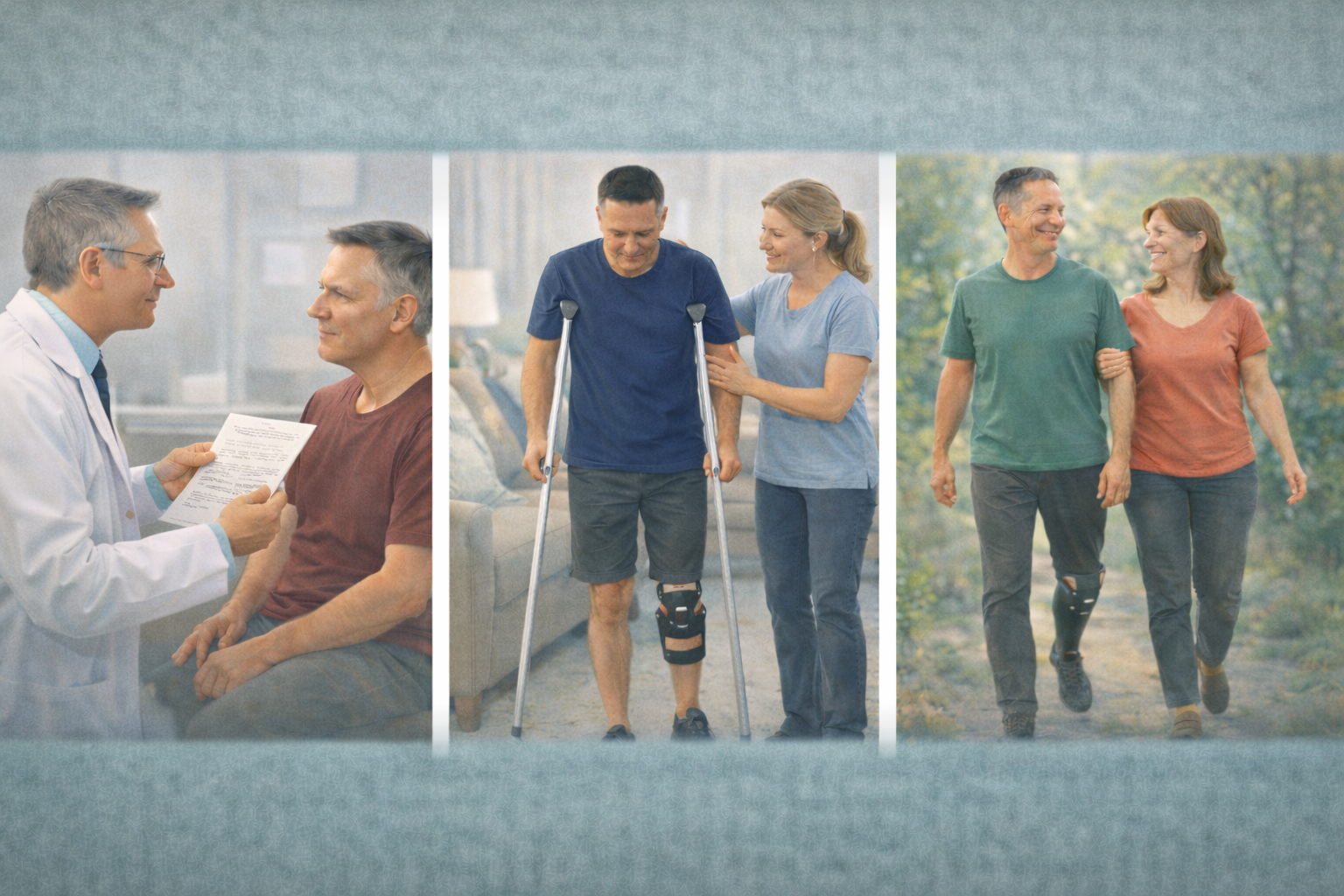
Prosthetic rehabilitation can affect nearly every part of daily life. Whether someone is learning to walk with a lower-extremity prosthesis, use an upper-extremity prosthesis for daily tasks, care for a residual limb, manage skin changes, adjust to socket fit, rebuild confidence, or return to work and community life, the process can feel overwhelming.
The Prosthetic Rehabilitation Companion was designed to reduce confusion and help users organize prosthetic training, residual limb care routines, skin inspection, socket and fit concerns, pain or phantom limb symptoms, mobility or hand-use challenges, fall risk, ADL and IADL participation, emotional adjustment, provider questions, and follow-up tasks in one clearer place.
This Companion supports both upper- and lower-extremity prosthetic rehabilitation. Lower-extremity prosthetic rehab often focuses heavily on walking, balance, transfers, fall prevention, endurance, community mobility, and socket tolerance. Upper-extremity prosthetic rehab often focuses on hand use, grasp and release, bimanual activity, controls training, body-powered or myoelectric use, dressing, grooming, meal preparation, work tasks, and meaningful daily participation.
This Companion does not prescribe prosthetic components, replace prosthetist fitting, replace therapy services, replace surgical follow-up, replace wound care, replace pain management, or replace individualized medical guidance. Prosthetic rehabilitation should be guided by the medical, prosthetic, therapy, and rehabilitation team.
The goal is not to rush prosthetic use. The goal is to help users understand what to track, what to ask, what affects daily function, and how to communicate more clearly with the people guiding their care.