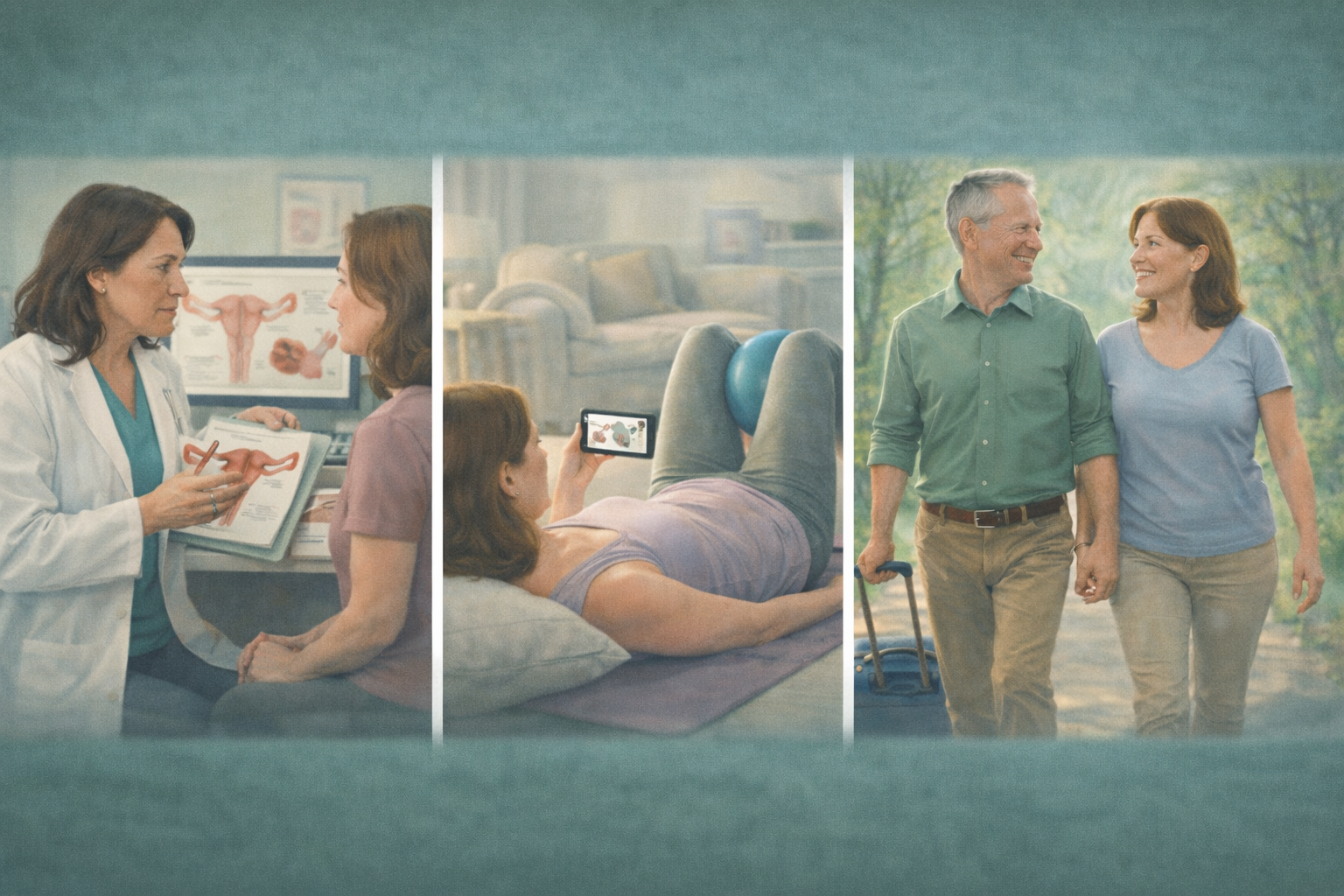
Pelvic floor concerns can affect daily life in ways that feel private, frustrating, confusing, or hard to explain. Bladder leakage, urinary urgency, urinary frequency, constipation, pelvic pressure, pelvic pain, pain with activity, discomfort after childbirth, symptoms after prostate treatment, or changes in toileting routines can interfere with self-care, work, sleep, intimacy, exercise, social participation, and confidence leaving home.
The Pelvic Floor Rehabilitation Companion was designed to reduce confusion and help users organize pelvic floor symptoms, daily routines, toileting habits, activity patterns, questions, and provider conversations in one clearer place.
This Companion does not diagnose pelvic floor dysfunction, prescribe pelvic floor exercises, replace pelvic health therapy, replace medical evaluation, or provide individualized treatment. Pelvic floor symptoms can have different causes, and the right approach may depend on whether the issue involves weakness, overactivity, pain, coordination, prolapse, bladder habits, bowel habits, surgery, childbirth, menopause, prostate treatment, neurologic changes, medication effects, or another health condition.
The goal is not to tell every user to do the same exercise. The goal is to help users understand patterns, track symptoms, support daily routines, avoid confusion, and prepare better conversations with the professionals guiding their care.